
Senin, 29 Juli 2019


Jumat, 31 Mei 2019


Rabu, 30 Januari 2019

Kamis, 26 April 2018

Bangun Industri Kayu Indonesia Melalui
Plywood Meranti dan Sengon
Sebagai perusahaan kehutanan yang mengelola kayu berkualitas dunia,
Perum Perhutani melalui Perhutani Plywood Industry (PPI) Kediri membuktikan komitmennya
untuk terus menciptakan produk unggul. Salah satunya olahan kayu Meranti dan
Sengon yang siap ekspor ke sejumlah Negara Asean dan dilaunching oleh Wakil
Kepala Divisi Regional Jawa Timur, Lucy Mardiana hari ini Kamis (26 April 2018) di Pabrik PPI – Dusun Kapasan,
Desa Gadungan, Kecamatan Puncu, Kabupaten Kediri, Jawa Timur.
Untuk ekspor perdana kali ini, sedikitnya memuat produk kombinasi
(bahan core sengon) – salah satu jenis plywood dengan bahan face back dari Meranti
ke Negara Thailand, Malaysia dan Singapura sebanyak 5 kontainer dengan nilai
sekitar Rp 2 Milyar.
 Menurut Lucy, ekspor plywood Meranti dan Sengon ini merupakan salah
satu jawaban atas tantangan yang diberikan kepada Perhutani untuk memenuhi
keinginan pasar. ‘’Karena kami sudah berkomitmen akan memberikan produk terbaik
dengan kualitas yang terjaga dan mampu memenuhi kepuasan pelanggan,’’ ujar Lucy
yang dalam acara launching didampingi General Manager KBM IHH Divre Jatim (Widhi
Tjahjanto), Administratur/KKPH Kediri (Ratmanto Trimahono) dan Kepala Pabrik PPI,
Menurut Lucy, ekspor plywood Meranti dan Sengon ini merupakan salah
satu jawaban atas tantangan yang diberikan kepada Perhutani untuk memenuhi
keinginan pasar. ‘’Karena kami sudah berkomitmen akan memberikan produk terbaik
dengan kualitas yang terjaga dan mampu memenuhi kepuasan pelanggan,’’ ujar Lucy
yang dalam acara launching didampingi General Manager KBM IHH Divre Jatim (Widhi
Tjahjanto), Administratur/KKPH Kediri (Ratmanto Trimahono) dan Kepala Pabrik PPI,
Setyono.

Launching plywood Meranti dan Sengon yang mengusung tema Terus
Membangun Industry Kayu yang Modern di Kancah Dunia tersebut, juga
dihadiri oleh Kepala Dinas Perindustrian Kabupaten Kediri dalam hal ini diwakili
oleh Kepala Bidang Perindustrian dinas perdagangan (Rossana) dan sejumlah mitra
PPI. Rossana menyatakan bahwa sesuatu yang membanggakan diwilayah Kabupaten
Kediri, ada perusahaan milik BUMN dalam hal ini Perum Perhutani mempunyai
potensi pasar yang bagus, mengarah pada produk ekspor, yaitu Plywood Meranti
dan Sengon, selain itu mampu menyerap tenaga kerja dari wilayah Kediri dan
sekitarnya.
Dikatakan, ke depan PPI akan melakukan eksport plywood meranti dan
sengon secara continue tidak hanya di sejumlah Negara Asean tapi juga ke beberapa
Negara di Timur Tengah. Selama ini PPI lebih banyak menciptakan produk untuk
memenuhi permintaan dalam negeri dari berbagai daerah. Dengan memperluas sayap
bisnis ke mancanegara, harapannya akan
mampu meningkatkan pendapatan perusahaan secara signifikan. PPI telah
beroperasi sejak tahun 2013 dan menghasilkan produk plywood, blockboard,
veneer, barocore, kayu gergajian dan door component. (Kesisteman/humasPPIKediri)
Kamis, 26 April 2018
………………………………….
Ttd
Minggu, 22 Januari 2017
Selasa, 13 Desember 2016
When Plywood Was Invented?
After 30 second google search turned up wikipedia website and several other sources. We can conclude that Plywood has been made for thousands of years; the earliest known occurence of plywood was in ancient egypt around 3500 BC when wooden articles were made from sawn veneers glued together crosswise.

But Many article has said
" Plywood was invented during the second world war, but it was primarily used to build PT Boats and landing craft for the military. After the war they began using plywood for residential construction and furniture by the end of the 1940's, there was a severege shortage of lumber suitable for making plywood. Particle board was invented in 1950 as a substitute for plywood, but it didn't receive much public attention at first
On more definitive facts
The first patent for what could be called plywood was issued December 26, 1865 belong to John K. Mayo of New York City. In 1905, the city of Portland, Oregon was getting ready to host a World's Fair as part of the 100th anniversary celebration of the lewis and clark Expedition. Severe local businesses were asked to prepare exhibits for the event, including Portland Manufacturing Company, a small wooden box factory in the St. Johns district of the city. Part owner and Plant Manager Gustav Carlson decide to laminate wood panels from a variety of Pacific Northwest softwoods. Using paint brushes as glue spreaders and house jacks as presses, several panels were laid up for display. Called "3-ply veneer work," the product created considerable among interest among fairgoers, including several door, cabinet and trunk manufacturers who then placed orders
IF you stay hungry about plywood history, There's a book by Eric Sloane called "A Reverence for
Wood" that you should check. It's out of print but available through
Amazon or maybe the library. It's a brief study of wood and woodworking
in North America from the early Native Americans to more recent times. A
beautiful piece of Americana.

Selasa, 25 Oktober 2016
COMPANY PROFILE
PPI located in the district of kediri was established in 2013 to create added value for the PERUM PERHUTANI company. As part of the State forestry enterprise with plywood as main product, also develop and support goverment policy for increasing national income.
Starting in 2014 Perhutani Plywood Industry joined KBM Wood Industry II, which is a factory with teak as main products, include: veneer, lamela, lumber, and finished flooring, while Perhutani Plywood Industry produce products such as plywood by utilize sengon wood.
In an effort to increase revenue and added value, the development of Perhutani Plywood Industry, PPI continue to establish ergonomically designed to provide added value and more profit for the company.

WE ARE LOCATED WHERE OUR CLIENTS NEED US
In addition to our headquarters in Jakarta Pusat, DKI Jakarta, Indonesia, and major office across the java island, our factory on pare, kediri, East Java is serve cllients across ASEAN Regional
WHAT WE DO
PPI lead clients on good corporation service (specially in plywood), providing best quality plywood with the latest production technology, and extensive partner community.
View our
WE DO AMAZING THINGS
Out traditional business model is based on the accomplishment of plywood manufacture in Indonesia. Based on the decision of the company diversify product, we have now established balkken and barecore manufacture. The revenue of our company are expected to be nearly $10.000 per year depending on variables that about plywood need in the properties or factory
Out traditional business model is based on the accomplishment of plywood manufacture in Indonesia. Based on the decision of the company diversify product, we have now established balkken and barecore manufacture. The revenue of our company are expected to be nearly $10.000 per year depending on variables that about plywood need in the properties or factory
OUR MANAGEMENT TEAM
Our senior management team has an average of 15 years of domestic plywood manufacture experience and strong history of business , academic , and technoloogical accomplishments.
FINANCIAL PERFORMANCE
PPI reported positive revenue for the 12 months ended
December 31, 2015

Minggu, 28 Agustus 2016
PPI Wood Resources
We understand that a quality finished product begins with quality raw materials. Our BBI Group (Wood Procurement) covers all Java island and also Madura island to secure the best timber available at competitive prices with support of 2,4 million ha forest that we have. We are large enough to deal with corporations and governmental agencies, yet small enough to give personal attention to the local landowner. We follow responsible forestry practices and use experienced, professional logging partners to harvest your timber. When your livelihood depends on the forest, environmentally sound practices are important to everyone from the landowner to the logger.
We are member of Perum Perhutani , which has a lot of forest areas to support our production


Perum Perhutani forest area covering an area of 2,446,907.27 ha, consisting of Production Forest ( HP ) and protected forests excluding forest nature reserves and forests .
The working area of the company is divided into three regional division with 57 Forest Management Units ( FMUs ) and Section 13 work units of forest resource planning ( SDH ), namely :
- Central Java Regional Division area of 635,746.78 hectares consisting of 20 KPH supported 4 SPH
- East Java Regional Division area of 1,134,052.0 hectares consisting of 23 KPH and 5 SPH
- Regional Division of West Java and Banten area of 678,244.6 hectares consisting of 14 KPH and 4 SPH
Selasa, 12 Juli 2016
Plywood As Construction Material
Plywood as a building material is very widely used due to its many useful properties. It is an economical, factory-produced sheet of wood with precise dimensions that does not warp or crack with changes in atmospheric moisture

Uses of plywood as a building material
Plywood has a huge range of used within the construction industry. Some of its most common uses are:
- To make light partition or external walls
- To make formwork, or a mould for wet concrete
- To make furniture, especially cupboards, kitchen cabinets, and office tables
- As part of flooring systems
- For packaging
- To make light doors and shutters
which wood is ply made of?
Plywood is manufactured from softwood, hardwood, or both. The hardwoods used are ash, maple, oak, and mahogany.Douglas fir is the most popular softwood for making plywood, although pine, redwood, and cedar are common. Composite plywood can also be engineered with a core of solid timber pieces or particleboard, with a wood veneer for the face and back. Composite plywood is preferable when thick sheets are required.
Additional materials can be added to the face and back veneers to improve durability. These include plastic, resin-impregnated paper, fabric, Formica, or even metal. These are added as a thin outer layer to resist moisture, abrasion and corrosion. They also facilitate better binding of paint and dyes.
PROPERTIES
 High Strength: Plywood has the structural strength of the wood it is made from. This is in addition to the properties obtained from its laminated design. The grains of each veneer are laid at 90 degree angles to each other. This makes the whole sheet resistant to splitting, especially when nailed at the edges. It also gives the whole sheet uniform strength for increased stability. Furthermore, plywood has a higher strength to weight ratio as compared to cut lumber. This makes it ideal for flooring, webbed beams, and shear walls.
 High panel shear: Plywood is made with an odd number of layers, making it tough to bend. The angle at which the veneer grains are laid against each other may be varied from 90 degrees. Each veneer can be laid at a 45 or 30 degree angle to the next one, increasing the plywood’s strength in every direction. This cross lamination increases the panel shear of plywood, important in bracing panels and fabricated beams.
Flexibility: Unlike cut timber, plywood can be manufactured to fit every requirement. The thickness of each veneer can vary from a few millimeters to several inches. The number of veneers used also ranges from three to several, increasing the thickness of the sheet. The extra layers add more strength to the plywood. Thinner veneers are used to increase flexibility for use in ceilings and paneling.
Moisture resistance: The type of adhesive used to bind the veneers makes the plywood resistant to moisture and humidity. A layer of paint or varnish can also increase resistance to water damage. These types of veneers are suitable for exterior use such as cladding, sheds, and in marine construction. They are also suited for holding concrete while it sets. Moisture resistance is important in interior applications as well, including on floors. The cross lamination ensures the veneers do not warp, shrink, or expand when exposed to water and extreme temperature.
Chemical resistance: Plywood treated with preservative does not corrode when exposed to chemicals. This makes it suitable for chemical works and cooling towers.
Impact resistance: Plywood has high tensile strength, derived from the cross lamination of panels. This distributes force over a larger area, reducing tensile stress. Plywood is therefore able to withstand overloading by up to twice its designated load. This is critical during short-term seismic activity or high winds. It is also useful in flooring and concrete formwork.
Fire resistance: Plywood can be treated with a fire resistant chemical coating. More commonly, it is combined with non combustible materials such as plasterboard or fibrous cement. This makes it ideal for use in fire resistant structures.
Insulation: Plywood has high thermal and sound insulation. This makes it a useful insulating material for flooring, ceilings, roofing, and wall cladding. Insulation offered by plywood can greatly reduce heating and cooling costs.
More Information
Perhutani Plywood Industri
Jalan Natuna, Dsn Kapasan, Kabupaten Kediri , Indonesia 64292
Telp : 0354 - 393668, Fax : 0354 - 393669
perhutani.plywood@yahoo.com
Senin, 11 Juli 2016
Plywood Manufacture Process
According PIKA Semarang (2008) , plywood have advantage that their resistance to shrinkage of the wood and the size of the length that may not be obtained from solid wood with same quality. But that does not mean plywood has an equally strong resistance to weather. This material is only recommended for indoor furniture. It explains that plywood is very good to fulfill the needs of large board so that the plywood has the typical functions that can be developed and commercialized. Plywood Production a. Memilih Log
Langkah pertama dalam pembuatan papan buatan adalah memilih log. Log dipilih berdasarkan kelurusan dan diameternya bundar atau tidak. Log yang baik untuk pembuatan plywood adalah yang bebas dari mata kayu.

b. Debarking
Proses ini persis seperti yang dijelaskan pada proses pembuatan vinir. Dari Proses Pembersihan kulit dan benda asing ( Paku, Batu, dll ) sampai proses pengupasan di Rotary dan akhirnya masuk dalam Drying Machine

*Vinir / Veneer (merupakan lembaran tipis kayu yang dihasilkan melalui beberapa proses mesin. Ketebalannya pun bervariasi tergantung dari fungsi dan pemakaiannya. Vinir yang digunakan untuk lapisan akhir sebuah plywood (multipleks) atau papan buatan lainnya biasanya cukup tipis namun berkualitas baik terutama dari sisi estetika atau keindahan) c. Vinir DryingProses pengeringan vinir, agar vinir mencapai tingkat kelembaban yang dibutuhkan

d. Gluing
Aplikasi bahan lem menggunakan roller coater sistem dan lem yang digunakan adalah jenis urea resin atau phenol-Formaldehyde. Jenis lem yang mengandung formaldehyde diketahui kurang baik untuk kesehatan dan lingkungan yang mana bahan kimia yang digunakan untuk membuat lem ini bisa mengakibatkan penyakit kanker.
 Oleh karena itulah beberapa konsumen besar saat ini mensyaratkan pabrik furniture mereka untuk menggunakan papan buatan yang bebas dari kandungan formaldehyde dengan cara melakukan test secara berkala.
Terdapat beberapa standar ukuran dan metode pengetesan untuk bahan kimia ini. Grade paling tinggi adalah E0 yang berarti NOL emisi. Kemudian terdapat grade E1, E2 san seterusnya. e. Pressing
Lapisan-lapisan vinir diatur di bawah mesin press dengan tekanan tinggi hingga ketebalan yang diinginkan. Sebuah mesin press plywood bisa memuat sekaligus untuk 50 lembar plywood dalam sekali tekan selama 3-4 menit.
Dengan jenis lem yang berbeda, pressing bisa dilakukan dengan 2 metode yang berbeda, hot press dan cold press.
Hot Press : Lazim dilakukan untuk plywood dengan bahan baku softwood dengan suhu mencapai 120 °C selama hampir 10 menit. Akurasi waktu pengepressan, tingginya tekanan dan temperatur sangat penting pada proses ini.
 Cold Press : Dilakukan dengan alat tekan hidrolik atau putar. Jenis lem
yang digunakan biasanya adalah resin atau urea-formaldehyde yang
memiliki proses pengeringan lebih lama. Pengepresan dilakukan selama
4-24 jam.
Cold Press : Dilakukan dengan alat tekan hidrolik atau putar. Jenis lem
yang digunakan biasanya adalah resin atau urea-formaldehyde yang
memiliki proses pengeringan lebih lama. Pengepresan dilakukan selama
4-24 jam.
 f. CuttingLembaran-lembaran plywood yang telah kering kemudian di potong sesuai
dengan ukuran standar arah panjang dan lebar. (Memotong sisi panjang dan sisi lebar)
f. CuttingLembaran-lembaran plywood yang telah kering kemudian di potong sesuai
dengan ukuran standar arah panjang dan lebar. (Memotong sisi panjang dan sisi lebar)
 g. SandingPermukaan plywood
dihaluskan dengan mesin amplas dan cacat-cacat produksi dibersihkan atau
diperbaiki.
g. SandingPermukaan plywood
dihaluskan dengan mesin amplas dan cacat-cacat produksi dibersihkan atau
diperbaiki.
 h. Quality Control dan Packing
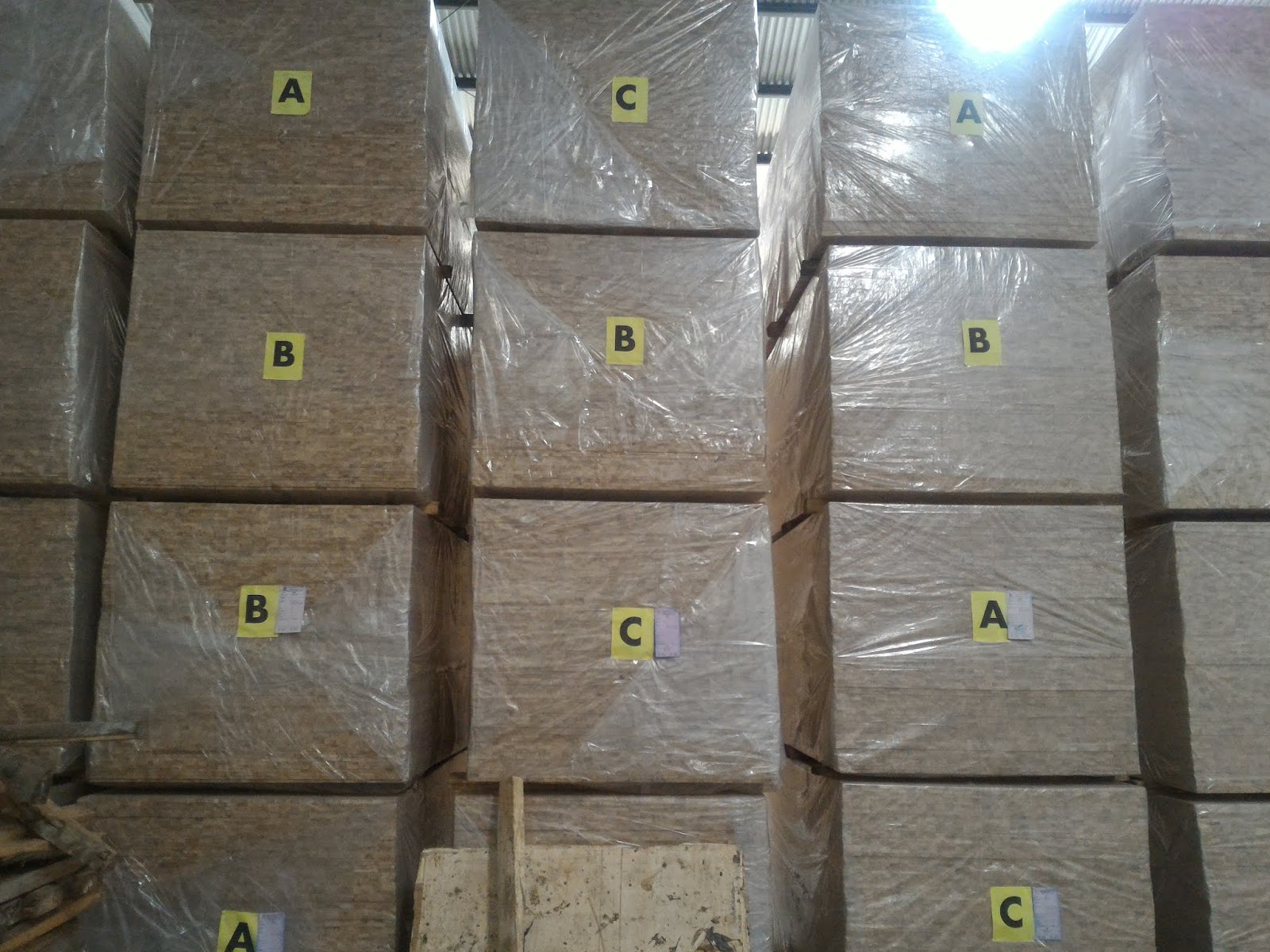
Terdapat grade kualitas pada plywood yang dikenal dengan standar kualitas A hingga C. A mewakili kualitas paling tinggi dan C kualitas paling rendah. Standar kualitas untuk plywood antara lain: tidak terdapat 'overlap' vinir atau terkelupas, warna dan serat kayu dan akurasi ketebalan plywood.

Langkah pertama dalam pembuatan papan buatan adalah memilih log. Log dipilih berdasarkan kelurusan dan diameternya bundar atau tidak. Log yang baik untuk pembuatan plywood adalah yang bebas dari mata kayu.

b. Debarking
Proses ini persis seperti yang dijelaskan pada proses pembuatan vinir. Dari Proses Pembersihan kulit dan benda asing ( Paku, Batu, dll ) sampai proses pengupasan di Rotary dan akhirnya masuk dalam Drying Machine

*Vinir / Veneer (merupakan lembaran tipis kayu yang dihasilkan melalui beberapa proses mesin. Ketebalannya pun bervariasi tergantung dari fungsi dan pemakaiannya. Vinir yang digunakan untuk lapisan akhir sebuah plywood (multipleks) atau papan buatan lainnya biasanya cukup tipis namun berkualitas baik terutama dari sisi estetika atau keindahan) c. Vinir DryingProses pengeringan vinir, agar vinir mencapai tingkat kelembaban yang dibutuhkan

Aplikasi bahan lem menggunakan roller coater sistem dan lem yang digunakan adalah jenis urea resin atau phenol-Formaldehyde. Jenis lem yang mengandung formaldehyde diketahui kurang baik untuk kesehatan dan lingkungan yang mana bahan kimia yang digunakan untuk membuat lem ini bisa mengakibatkan penyakit kanker.

Terdapat beberapa standar ukuran dan metode pengetesan untuk bahan kimia ini. Grade paling tinggi adalah E0 yang berarti NOL emisi. Kemudian terdapat grade E1, E2 san seterusnya. e. Pressing
Lapisan-lapisan vinir diatur di bawah mesin press dengan tekanan tinggi hingga ketebalan yang diinginkan. Sebuah mesin press plywood bisa memuat sekaligus untuk 50 lembar plywood dalam sekali tekan selama 3-4 menit.
Dengan jenis lem yang berbeda, pressing bisa dilakukan dengan 2 metode yang berbeda, hot press dan cold press.
Hot Press : Lazim dilakukan untuk plywood dengan bahan baku softwood dengan suhu mencapai 120 °C selama hampir 10 menit. Akurasi waktu pengepressan, tingginya tekanan dan temperatur sangat penting pada proses ini.
Cold Press : Dilakukan dengan alat tekan hidrolik atau putar. Jenis lem
yang digunakan biasanya adalah resin atau urea-formaldehyde yang
memiliki proses pengeringan lebih lama. Pengepresan dilakukan selama
4-24 jam. 
Terdapat grade kualitas pada plywood yang dikenal dengan standar kualitas A hingga C. A mewakili kualitas paling tinggi dan C kualitas paling rendah. Standar kualitas untuk plywood antara lain: tidak terdapat 'overlap' vinir atau terkelupas, warna dan serat kayu dan akurasi ketebalan plywood.

Kamis, 23 Juni 2016
Most Common Use For Softwood Plywood
Softwood plywood is a common building material for roofs, walls and floors.
Softwood comes from various species of evergreen conifers including
spruce, pine and fir. Plywood made from softwood is a building product
commonly found in home construction and is also used for other purposes.
Softwood plywood is available in different grades for various
applications. The finish on softwood plywood ranges from fully sanded to
not sanded at all, depending on the intended use.
Exterior Home Sheathing
 The most common wall construction on a new home consists of a 2-by-4 or
2-by-6 frame covered by exterior-grade sheathing. This type of wall
forms a structural panel that performs well at high wind loads and
during earthquakes. Plywood panels fastened to each stud and to the top
and bottom plates of the wall frame strengthen it and resist vertical,
horizontal and diagonal shifting. Strict adherence to building codes for
fastener placement, distance between studs and the joints between
panels ensure strong, solid walls.
The most common wall construction on a new home consists of a 2-by-4 or
2-by-6 frame covered by exterior-grade sheathing. This type of wall
forms a structural panel that performs well at high wind loads and
during earthquakes. Plywood panels fastened to each stud and to the top
and bottom plates of the wall frame strengthen it and resist vertical,
horizontal and diagonal shifting. Strict adherence to building codes for
fastener placement, distance between studs and the joints between
panels ensure strong, solid walls.Home Roofing and Flooring

Plywood for building construction has a span rating that governs how it
is used to build subfloors and to sheath roofs. On floors, the plywood
panels have tongue-and-groove edges that fit together. On a roof, the
plywood carries less load and the tongue-and-groove edges are not
required. The manufacturer-assigned span rating for roofs and floors
specifies the maximum allowed distance between rafters for a roof and
between joists for a floor.
Other Construction
Softwood plywood has other applications in home building in addition to
roofs, walls and floors. Eaves and soffits are often covered with
plywood. Some plywood is manufactured specifically as a siding product,
most notably T-111 siding, a grooved sheet product made to appear
similar to reverse board and batten siding. Builders also use plywood
for building detached garages and sheds, temporary flooring and concrete
forms. Plywood is also used for many of the same purposes in commercial
building construction.

General Projects
Softwood plywood has many uses beyond building homes and is used for a
wide range of projects from skateboard ramps to doghouses. In the
workshop, softwood plywood covers work tables and is used to build
sawhorses and general-purpose shelving. It is inexpensive, available in a
wide range of thicknesses and grades, ranging from exterior with
exposure to the elements to interior dry areas.
Rabu, 22 Juni 2016
Indonesian Standard For Plywood Product
Indonesia has National Standard Product for Plywood ( SNI - Standard Nasional Indonesia ), which we can seen in INTERNAL GRADING STANDARD - SNI 01-5008.2-2000.
National Standards
provide a broad picture of what plywood product should be and process to be on track for successful
outcomes across the whole process. They are nationally
consistent reference points describing what plywood should be describing
for or beyond as they progress constantly.
PPI as one of the largest Plywood Industry on Indonesia has implemented SNI as our standard to raise our product qualification and also fulfill customer aim to has great product with low cost. There are some standard that PPI used for plywood manufacturing :

So with plywood standard that has been implemented. We can guarantee PPI product must be excellent in quality and price
Grab it Fast !!!!
Selasa, 21 Juni 2016
Knowing Our Product

Plywood was divided into two criteria, They are Hard Plywood and Soft Plywood. We will introduce you to identify our product.
First, Hardwood plywood has a distinct face and a distinct back. In a cabinet door, for example, you want the best appearance possible on the outside. On the inside, you still want it to look good, but small areas of burl, mineral streaks or sap wood won't be the distractions they would be on a surface that is always exposed.
Different than hardwood plywood, Softwood Plywood is plywood which has a face and back veneer of softwood as opposed to a hardwood such as Sengon, Birch, Maple, Oak, etc. Softwood plywood panels are comprised of a core made from either softwood then faced and backed with a veneer of soft wood and therefore are used for structural applications. It is manufactured from a long-grained, homogenous Nordic conifer with straight fibers. Its veneer structure gives this versatile plywood panel considerable strength and rigidity. Softwood spruce plywood panels are light, easy to work with and easy to install using conventional wood-working tools and fasteners. As well as being beautifully light coloured, Softwood plywood is also up to 20% lighter than many alternatives whilst maintaining similar strength characteristic and resistance to humidity. Excellent weather and boil-proofing is ensured by using fully water proof adhesives in our manufacturing process.

Softwood Plywood is used mainly in the construction industry for structural purposes. There are many grades, size, and thicknesses of softwood plywood depending how they are to be used however in the highest of grades they are sometimes used for decorative purposes such as furniture and cabinet making. Most softwood plywood are made with moisture resistant glue (such as phenol resin adhesive#2) and are exterior grade panels.
Softwood Plywood can be handled with ordinary woodworking tools and basic skills. When hand sawing or cutting on a table saw, support the panels firmly with the best face up. Cut with the best side down when using a portable power saw. Do not force-feed the panel into the tool or the tool into the panel too quickly because this will increase the roughness of the cut and may induce splintering-out on the exit side. Proper backup of the material also can reduce splintering.
Softwood Plywood major advantages- Light and dimensional stable
- Strong and rigid
- Can act simultaneously as load-bearing construction and stiffening element
- Easy to machine and fasten using conventional woodworking tools and fasteners
- Can withstand impacts and other forms of bruising
- Environmental friendly
- Available with square edges and tongue-and-groove profiles
- Weather and boil proof bonding
Softwood Plywood in Perhutani Plywood Industry is made of Sengon Wood. We are supported by sustainable forest management unit, and covers more than 2.4 milion Ha in Java and Madura so we mainly produce Plywood form softwood of Natural Wood (Paraserianthes Falcataria).
Here is the Specification of our Softwood Plywood in Perhutani Plywood Industry :
Sizes
|
1220 Х 2440 mm and cut-to-size
|
Thickness
|
2.7 / 4.8 / 7.5 / 11.5 mm
|
Grades
|
UTY, UTY/BTR
|
Formaldehyde emission
|
E-2
|
Density
|
500-550 Kg/m3
|
Moisture content
|
Max. 10%
|
Ultimate shearing strength
|
1,5 mPa after one hour boiling
|
Static bending strength
|
mPa not less - 40
|
Ultimate creasing strength
|
mPa not less - 70
|
Our Factory Certification are:
· ISO 9000 Management System Certificate
· Indonesian SVLK (Legal Wood)
Langganan:
Postingan (Atom)